

When I first taught myself web development using free textbooks and open course materials, I assumed the hard part would be finding good resources. It turns out the hard part was staying focused long enough to actually use them. A long chapter looks harmless until you are 20 minutes in, rereading the same paragraph, and wondering why your brain suddenly wants to reorganize your entire desk.
Textbook fatigue is not a character flaw. For many people, it is partly a planning problem, and partly an energy problem (sleep, stress, attention issues, eye strain, unrealistic workload, all of it). The fix is still surprisingly practical: time-blocking that respects how attention works, plus a few small adjustments that make reading less punishing. Below are the two approaches I come back to constantly for heavy reading assignments: Pomodoro sprints and targeted focus blocks.
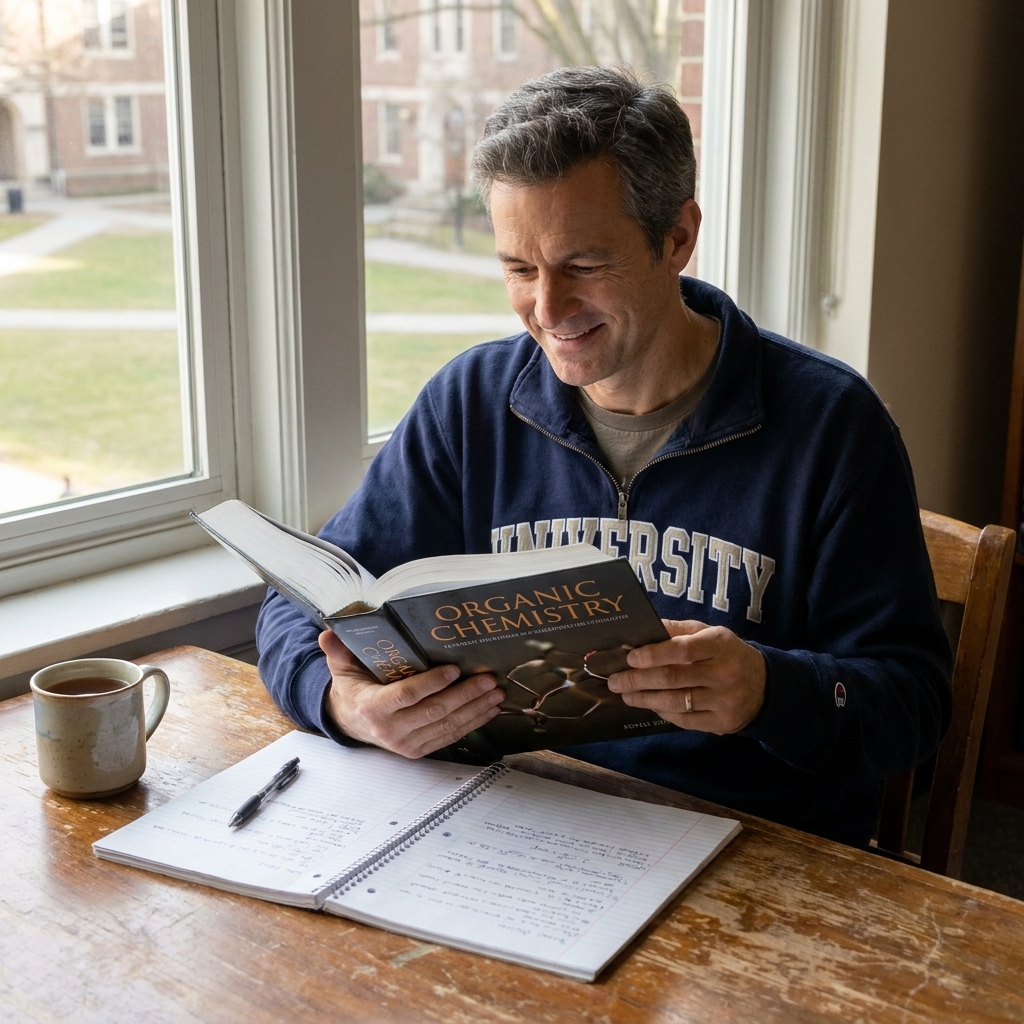
What textbook fatigue is
Textbook fatigue usually shows up as one of these:
- Attention slip: you read, but nothing sticks.
- Low-grade stress: you are behind, so you rush, so you understand less, so you fall further behind.
- Decision fatigue: you keep choosing between highlighting, note-taking, rereading, and searching for videos, and that constant switching drains energy.
Time-blocking helps because it removes a lot of in-the-moment decisions. You decide once, then follow the plan.
Make a reading map (5 minutes)
Before you set a timer, get clarity on what you are trying to do. I use a quick “reading map” so my time blocks have a purpose.
Step 1: Define the output
Pick one outcome for the session. Examples:
- Answer the end-of-chapter review questions (even if you do not submit them)
- Write a half-page summary in your own words
- Extract 10 terms for flashcards
- Solve 6 practice problems without notes
This matters because reading without an output is where fatigue thrives.
Step 2: Preview like a strategist
Skim headings, bold terms, chapter objectives, and summaries. If you want a structured method for dense chapters, my go-to is SQ3R. I break it down here: /sq3r-for-dense-textbook-chapters/.
Technique 1: Pomodoro sprints
Pomodoro works best when the reading is mentally “sticky,” meaning it is slow to parse and heavy on working memory. Think philosophy, law, dense biology, research methods, or anything with lots of new vocabulary or abstract arguments.
The default setup
- 25 minutes read with one clear target
- 5 minutes break
- After 4 rounds, take a 15 to 30 minute longer break
I treat each 25-minute sprint as a tiny contract: no tabs, no wandering. Just the next few pages and one small output.
Make it feel less mechanical
If 25 minutes feels too short to build momentum, try:
- 35/7 when you are warmed up
- 15/3 when you are exhausted but need to start
- 25/5 with a 60-second recap at the end of each sprint
That last one is huge. In the final minute, pause and write what you just learned, in plain language. This is retrieval practice, and it tends to strengthen memory and improve long-term recall.
What to do during the 5-minute break
Breaks are part of the system, not a reward. Choose something that restores attention instead of consuming it.
- Stand up and look out a window
- Refill water
- Walk to another room and back
- Do a quick stretch
I avoid “breaks” that create a second activity stream, like social media or email. For many people, those add cognitive load and make it harder to settle back into reading.
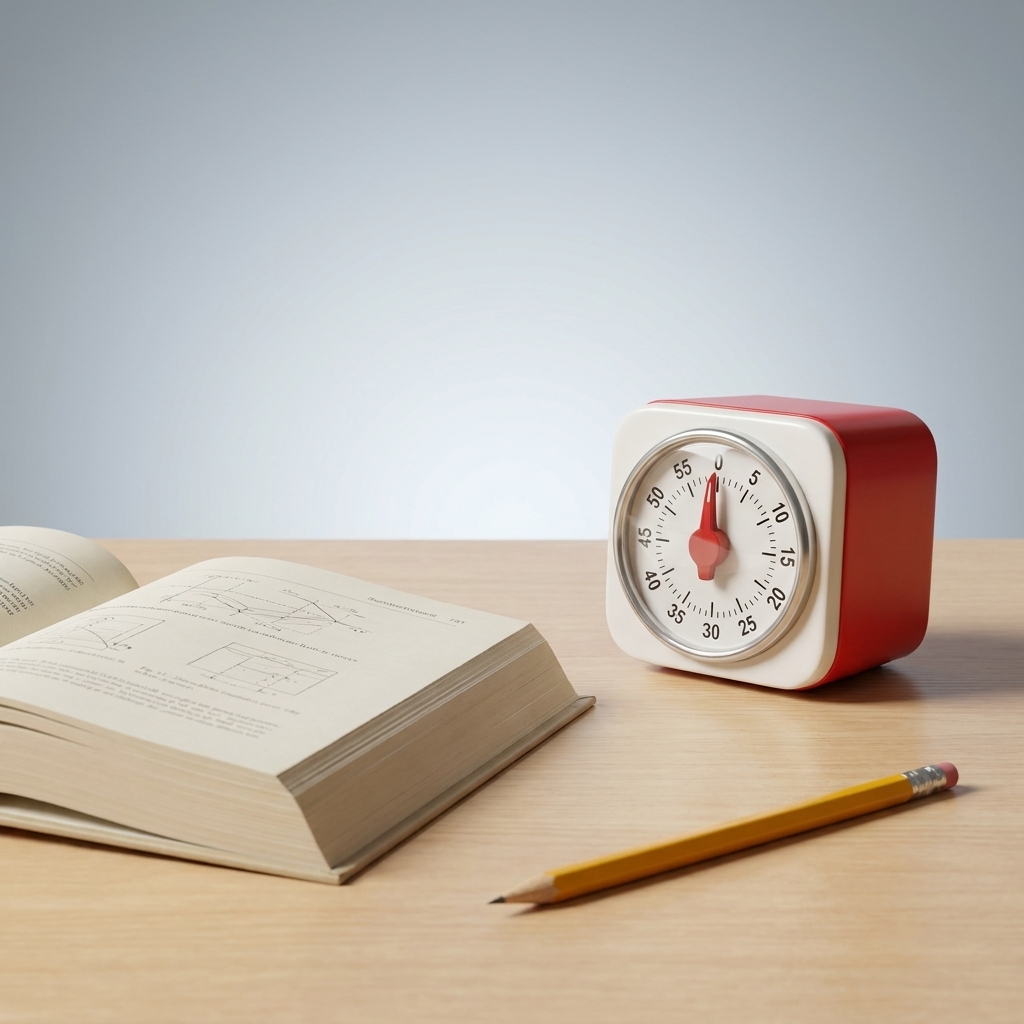
Technique 2: Focus blocks
Pomodoro is great for consistent progress. But when you have a heavy assignment, like 80 pages before Tuesday, you also need longer blocks where you can sink into the material.
I use targeted focus blocks when the reading is more narrative or when I need continuity: history chapters, case studies, literature surveys, or any section where context matters.
My favorite formats
- 50/10: 50 minutes deep work, 10 minutes break
- 75/15: for high-stamina days
- 90/20: only if the environment is quiet and I know exactly what I am doing
The key is that the block is targeted. Do not schedule “read chapter 7.” Schedule “read sections 7.1 to 7.3 and produce a one-page concept outline.”
If you are unsure how long it will take, plan by sections and checkpoints, not pages. Pages lie. Concepts do not.
Use the first 5 minutes rule
Fatigue often comes from starting. So I design the first 5 minutes of a focus block to be nearly effortless:
- Open to the exact page
- Write the session goal at the top of your notes
- Skim headings and figures
- Decide what you will ignore for now
Once you are moving, staying moving is easier.
A plan that prevents burnout
Here is a practical schedule I use when I have a big reading load. Adjust the minutes, but keep the logic.
Example: 3-hour session
- 5 minutes: reading map (goal, preview, first target)
- 50 minutes: focus block 1 (read and annotate lightly)
- 10 minutes: break (move your body, water)
- 25 minutes: Pomodoro sprint (rewrite key ideas as questions)
- 5 minutes: break
- 25 minutes: Pomodoro sprint (answer your own questions without looking)
- 20 minutes: longer break (food, short walk)
- 50 minutes: focus block 2 (practice problems or end-of-chapter questions)
This mix works because it alternates input (reading) with output (retrieval and practice). Output is what keeps you awake and makes the session feel meaningful.
Read without drowning in notes
I used to highlight everything because it felt like progress. Now I treat highlighting as a bookmark, not a learning strategy.
Use a two-layer note system
- Layer 1 (in the book): minimal highlights and margin cues, only for definitions, formulas, or claims you must remember.
- Layer 2 (in your notes): short prompts that force recall, like “Explain X in 2 sentences” or “When would Y fail?”
If you want a deeper approach to notes that stick, I laid out my workflow here: /digital-textbook-note-taking-that-actually-sticks/.
Switch from copying to questioning
Whenever you feel fatigue rising, change the task inside the same time block:
- Turn a paragraph into a question you can answer later
- Summarize a section from memory, then check accuracy
- Create one example that applies the concept to real life
This keeps your brain in active mode instead of passive scanning.
Environment tweaks
Time-blocking works best when your environment supports it. A few small changes can make a big difference.
- Remove choice: open only what you need for this block.
- Make distraction costly: put your phone in another room if possible.
- Reduce friction: keep water, pen, and paper within reach.
- Use one parking lot: a scrap page where you dump unrelated thoughts like “email professor” or “buy groceries” so they stop interrupting you.
If it is still not working
If you keep failing the blocks, do not treat that as proof you are lazy. It is usually a signal that something in the setup is mismatched.
- Drop the block size: if 50 minutes is a brick wall, use 15/3 or 20/5 for two days, then scale up.
- Move earlier or later: some chapters only cooperate at your best time of day.
- Go problems-first: try starting with end-of-chapter questions, then read only what you need to answer them.
- Fix the physical stuff: brighter light, bigger font, better chair height, and real breaks for your eyes can change everything.
- Check the load: if the workload is genuinely unrealistic, the “strategy” might be asking for a conversation with your instructor or a tighter definition of what “good enough” looks like.
When you are too tired
Sometimes fatigue is a real signal, not just boredom. If your comprehension drops hard, do not brute-force another hour of low-quality reading. Pivot to a lower-cognitive task that still moves you forward.
Good pivots
- Rewrite headings as questions for tomorrow’s session
- Do a light skim and mark confusing sections with sticky notes
- Make a glossary list and look up only the top 5 most frequent terms
- Switch to audio if you have it available (some platforms offer this)
I have collected options and tradeoffs for listening instead of reading here: /audio-textbooks/.
Make it sustainable
The fastest way to get textbook fatigue is to cram all reading into one brutal day. If you can, distribute the load with repeating blocks.
A weekly rhythm
- Day 1: first pass reading (focus blocks)
- Day 2: retrieval and questions (Pomodoro)
- Day 3: practice problems or application (focus block)
This is distributed practice. You return to the material before it fully fades, which is the basic spacing effect in plain clothes.
Quick FAQ
Is Pomodoro better than longer blocks?
Neither is universally better. Pomodoro is great for starting and for dense material. Longer focus blocks are better when you need continuity. I usually combine them in one session.
What if I cannot stop at the timer?
If you hit a flow state, finish the paragraph or section, then stop. The timer is there to prevent drift, not to interrupt good momentum.
How do I time-block if I read slowly?
Do not time-block by pages. Time-block by tasks and checkpoints. For example, “understand and summarize section 3.2” is a better target than “read 12 pages.”
Do free online textbooks change this advice?
The tactics are the same, but digital reading adds more temptation to multitask. If you read on a device, use full-screen mode, close extra tabs, and keep notes simple. If you are building a self-taught plan from free materials, this guide helps you structure it: /build-a-self-taught-curriculum-with-free-open-textbooks/.
A simple starting challenge
If you want to test this without overhauling your whole routine, do this today:
- Pick one chapter section.
- Set a 25-minute timer.
- Read only until the timer ends.
- Write a 5-sentence summary from memory.
That tiny loop is often enough to break the fatigue spiral, because it replaces vague “I should read more” pressure with a concrete, finishable unit of work.